| Back to Back Issues Page |
 |
|
The Goldfish Gazette, Issue #147 Acceptable Fry Losses March 29, 2026 |
Goldfish Care TipsA Free Monthly Resource For Goldfish Enthusiasts In This Issue Many Goldfish breeders consider some losses inevitable, treating them as part of raising Goldfish fry. However, this view deserves to be challenged. So, how many losses should be deemed acceptable? My answer is simple: close to zero. Anything more should prompt close scrutiny and preventive action. Acceptable Fry Losses
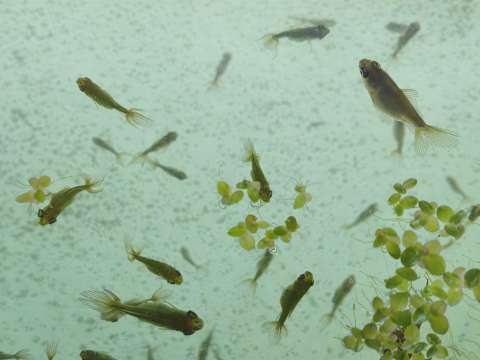
Black Moor Juveniles at 40 daysThe Goldfish breeding season is about to ramp up in the Northern Hemisphere, and it is around this time in early spring that Goldfish enthusiasts start thinking about breeding their fish.Many breeding attempts will end in disappointment as the spawn starts to incur losses, some ending in total loss. Acceptable Spawn LossesComing back to my comment that near zero is the expected number of losses, it is based on my many decades of breeding Goldfish and raising them initially in aquariums before moving them into small 300-liter (80 US gallon) ponds. For example, during the just-finished breeding season, I had a small spawning of Black Moors, which I hatched in a 90-liter (24 US gallon) tub. After removing the spawning mops when the fry became free swimming, I tested for ammonia and got a reading of 0.25, which was way too high. I did an immediate water change. 25 days after spawning, I culled for single and tri-tails, and from about 850 fry, I culled them down to 775. The only losses up to this stage were fry that didn’t develop swim bladders and those with physical deformities that prevented them from getting food. Those numbers were tiny, so tiny I didn’t see more than 5-10 bodies. The fry would have been around 11mm (7/16") long. The now juveniles were moved outside to a 300-liter (80 US gallon) pond as the 90-liter tub was looking very crowded. I had delayed putting them outside because of unseasonably cooler temperatures. 11 days later, I notice some of the juveniles had sharp tail fins, a sure sign that there is a problem. I tested the water parameters, and no ammonia was detected. I knew they didn’t have parasites, so this could only be caused by water quality. I did an immediate water change. There had been no deaths, but if it had been left for another 24 hours, it would have been a different story. Within 24 hours, they were looking normal again. After 67 days from the spawning date, and the pond looking ridiculously overcrowded, the fish were culled for a second time, with the 50 best kept for growing on. The average size was around 22mm (7/8"). The rest were sent to a grower with a large facility used mainly for growing grass carp and single-tailed varieties. That outcome is for another e-Zine and yes, there have been losses. Reasons for LossesWater qualityTest the water quality around the time the fry start hatching. Ammonia build-up is caused by dead eggs rotting, unless you are running a sponge filter in the hatching container. If you use Methylene Blue to control fungus spread, as I do, that’s not possible, which is why there's an ammonia danger. Inadequate FeedingA good indication of this is the presence of large size differences within the spawn, accompanied by losses. ParasitesFlukes, gill or body, will rip through a spawn in days, killing most fry. The survivors' growth slows to a crawl, and unless treated promptly, they never reach their growth potential. ConclusionTo maintain near-zero fry losses, conduct regular water-quality checks, and if a problem is suspected, act immediately by changing the water. Keep a Praziquantel-based medication on hand for parasites, and ensure the fry always have fat, rounded bellies. Consistent, meticulous care will reward you with losses close to zero.
Comments? Ideas? Feedback? I'd love to hear from you. Just reply to this e-zine and tell me what you think, or what topics you want to be covered. www.facebook.com/aboutgoldfish |
| Back to Back Issues Page |