| Back to Back Issues Page |
 |
|
The Goldfish Gazette, Issue #145 Raising Mosquito Larvae January 31, 2026 |
Goldfish Care TipsA Free Monthly Resource For Goldfish Enthusiasts In This Issue Raising mosquito larvae is very similar to raising Goldfish fry. Both need clean water, plenty of food, and adequate water surface area. Raising Mosquito Larvae
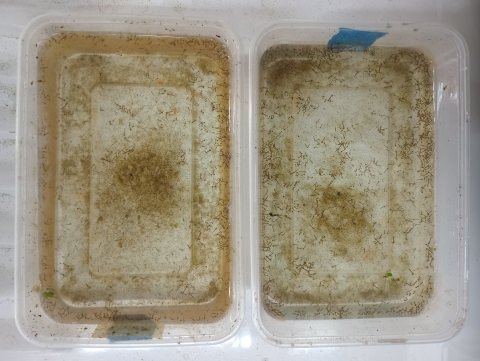
Larvae in grow out traysAs I discussed in my Goldfish Gazette issue # 109 , mosquito larvae (wrigglers) can be considered a superfood for Goldfish of any age.In that issue, I discussed the health benefits of feeding them to your Goldfish and the low cost. I didn’t go into much detail about how to raise larvae, as that would require a Gazette of its own, hence this follow-up issue. Illegal to Raise Larvae in Some Countries and US StatesIf you live in an area or country where mosquitoes carry Malaria, Dengue fever, or any other serious diseases, mosquito larvae will not be an option as live food for your Goldfish.Be aware that it is illegal to raise mosquito larvae in some countries and US states, such as California. If in doubt, check with your local authorities first. Attracting Egg Laying FemalesMosquitos seem to be quite picky where they lay their eggs. I have several containers they can use, and often one will have dozens of eggs on the surface, while the one next to it will have only a few.Here is a list of the conditions I have found to be most successful in attracting mosquitoes:
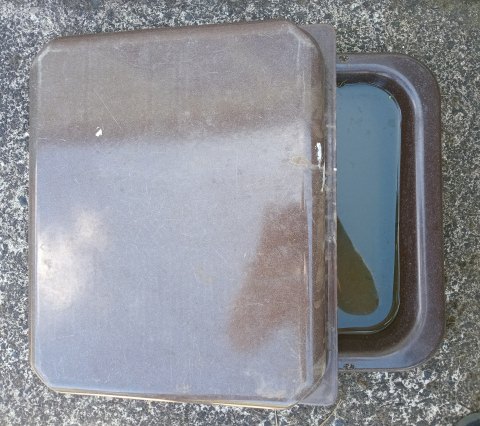
Baking trays used to attract female mosquitoesThe smell of stagnant water attracts mosquito females, but they don’t lay their eggs in it. The best attractant seems to be fresh rainwater with a little rotting vegetation, signaling to the female that this is a clean water source with an adequate food supply for her larvae.Water ConditionsContrary to popular belief, mosquito larvae need clean, ammonia-free water to grow in. They die in polluted water.Larvae don’t thrive in deep water; they seem to prefer water around 25-75mm (1-3") deep. From my experience, each larva needs about 0.6 ml of water, and you can squeeze about 10 larvae into each square centimeter of surface area. Squeeze any more than this in, and you find you get large die-offs, either due to feeding competition, surface space competition, or disease. I’ve yet to establish the reason. This means you have to work out the average number of larvae from an average-sized raft you collect. My average is around 120 larvae, as I get a lot of small rafts. The frequency of water changes depends on how crowded your raising containers are. At the maximum numbers described above, a water change is required every two days. I pour the larvae into a canister filter cloth bag used to hold media while I change their water, as when they are only a few days old, there is no sieve small enough to catch the tiny larvae. Gross FeedersMosquito larvae are gross feeders, meaning the more you feed them, the faster they grow. Stop the flow of food for even a day, and you will get large die-offs.I feed mine twice a day using Repashy gel food powder, a very expensive exercise. I suggest a mix of bakers’ yeast and spirulina powder, flour, or powdered high-protein fish food; they aren’t that fussy. This heavy feeding necessitates frequent water changes. For more information, go to Gazette Issue #109. Comments? Ideas? Feedback? I'd love to hear from you. Just reply to this e-zine and tell me what you think, or what topics you want to be covered. www.facebook.com/aboutgoldfish |
| Back to Back Issues Page |