| Back to Back Issues Page |
 |
|
The Goldfish Gazette, Issue #152 Sponge Filter Efficiency August 30, 2026 |
Goldfish Care TipsA Free Monthly Resource For Goldfish Enthusiasts In This Issue Sponge filters are widely used by Goldfish enthusiasts because of their simplicity, effectiveness, and cheapness. Sponge Filter Efficiency
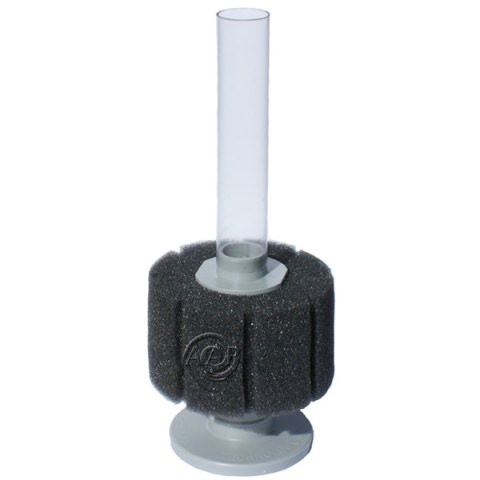
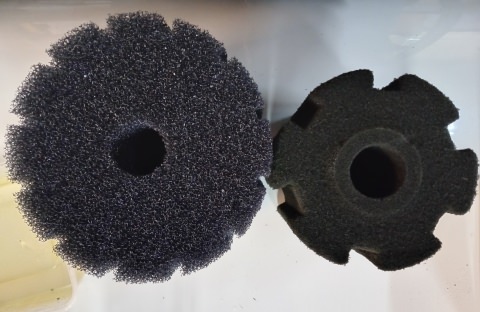
Typical sponge filterI use sponge filters extensively, both indoors and in my ponds.Recently, because I have been heavily bio-loading some of my aquariums with large fish, my filters have been under some stress. I have noticed some of the filters haven’t been coping well, and the water has become cloudy, while other filters seem to be fine. On further investigation, I found the cheaper, readily available pet store filters weren’t coping, while the American Aquarium Products-sourced filters were. The cheaper filters appeared to develop their beneficial bacterial colony on the outside of the sponge material, and when cleaned, didn’t seem full of bacteria as expected. I did some research and found an article on the American Aquarium Products (AAP) website about sponge quality, or lack thereof. They claimed theirs was the best, which wasn't surprising; however, my anecdotal evidence suggests they may be right. Filter Sponge ComparisonAAP claims cheap filters have sponge material that clogs quickly, and doesn’t hold as much bacteria, proven by how quick it is the squeeze them clean. I have experienced the same results.Looking at the image below, you can see the obvious density differences in the filter media; the AAP product is on the left.
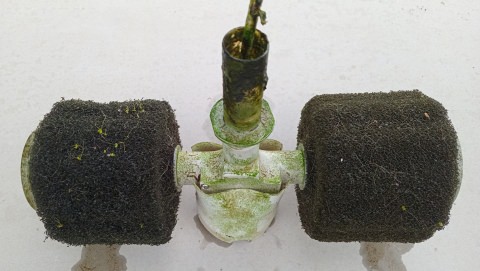
Sponge filter mediaThis was a problem, since most of my inside filters are the cheaper ones. I use the AAP filters in my ponds and larger aquariums.Sponge Media SwapI was replacing the sponge media on one of my outside AAP filters (UV degrades the media) when I noticed the media dimensions were close to those of the cheaper filters (same height, close mounting hole size).I found the AAP media was a direct swap. I have no issues with the design of the cheaper filters; in some ways, they are better than the AAP product. This has given me the ideal solution to my problem, since AAP sells sponge media separately. Pond ApplicationMy ponds are only small, 300 liters (79 US gallons, 66 UK gallons), so the AAP Hydro Sponge #5 PRO rated for 100 US gallons was a good starting point.As I mention on the website, I double the filtration capacity for Goldfish, so I wanted to install two of these filters in each pond. I had a problem, though. My ponds are only 300mm (12 inches) deep, so I couldn’t stack the filters as they are designed to do. My solution was to mount two filters horizontally on a plastic electrical conduit tee fitting.
Pond filter assembly using two filters horizontallyI then used a spouting down-pipe fitting to support the assembly. This system has worked well and kept the pond water clear.ConclusionSome aquarists dislike sponge filters because they see them as old technology or not efficient enough, but that's not the case if installed correctly.For sponge filters to work properly, there must be enough air pumped into the filter to create sufficient water movement up the outlet stem. Check that the sponge media suits the application: fine for low-bio-load small fish installations, medium for larger installations or bigger fish, and coarse for large aquariums and ponds. Clear water and little organic buildup indicate the filter is working. Disclaimer: AAP did not sponsor this article, nor do I receive a commission from any sales. Comments? Ideas? Feedback? I'd love to hear from you. Just reply to this e-zine and tell me what you think, or what topics you want to be covered. www.facebook.com/aboutgoldfish |
| Back to Back Issues Page |